
Suppressor Heat Mirage Can Affect Rifle Scope Visibility After Repeated Shots
Silencer Central is a firearms industry company specializing in suppressors and related accessories. The company

Press Release Disclaimer: This is a press release distributed through the XPR Media network. It has not been independently verified by our newsroom.
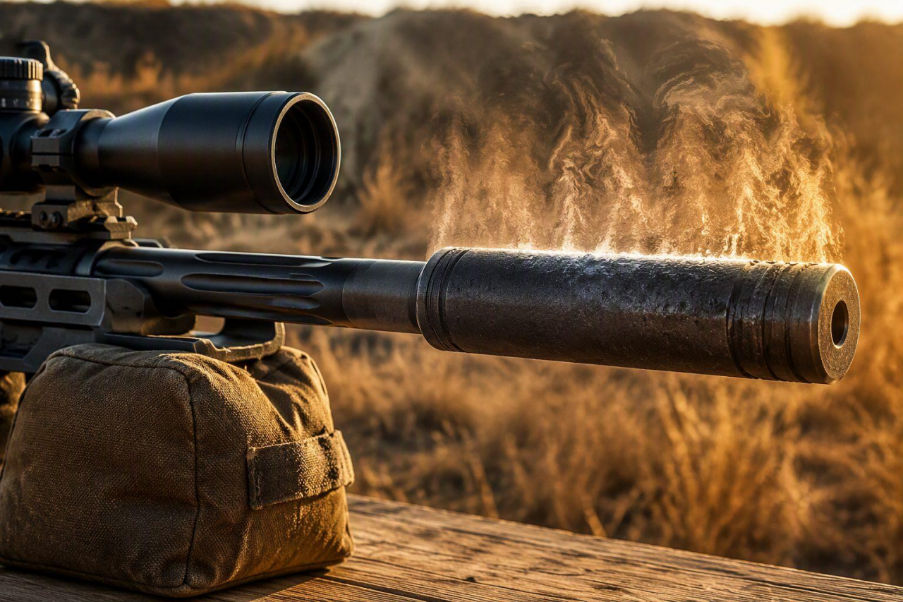

Understanding heat buildup, optical distortion and safe cooling practices can help shooters distinguish mirage from potential equipment issues.
New York USA, 14 October – Repeated firing can introduce heat-related distortion into a rifle scope’s sight picture, making a distant target appear to shimmer or move behind a steady reticle. This phenomenon, commonly known as heat mirage, silencer cover can occur when heated air rising from a firearm’s barrel or suppressor bends light before it reaches the optic.
Understanding the difference between optical distortion and a mechanical equipment problem is important for recognizing when a firearm system requires cooling or inspection.
How suppressor heat affects optical clarity
A suppressor absorbs heat from propellant gases during firing. As its surface temperature rises, the surrounding air warms and moves into cooler air, creating variations in air density. These variations alter the path of light and can make objects viewed through a riflescope appear wavy or distorted.
The effect can become particularly noticeable when a suppressor sits close to the scope’s line of sight. Higher magnification may make the distortion more apparent because small changes in the image become easier to see.
A reticle that remains visually sharp while the target appears to move can be consistent with heat mirage. However, this observation alone does not rule out other optical or mechanical issues.
Firing conditions and equipment configuration matter
Heat accumulation depends on several factors, including firing frequency, ammunition, barrel and suppressor construction, ambient temperature and airflow. Closely spaced shots can increase heat faster than the equipment can dissipate it, while still air may allow rising heat distortion to remain in the viewing path.
Wind and changes in viewing angle can alter how much distortion reaches the optic. Barrel heating can also affect a firearm’s point of impact, which is a separate issue from the apparent movement caused by mirage.
Distinguishing these effects is important. Heat mirage typically changes with temperature and airflow, while persistent accuracy problems may warrant an inspection of the optic mounting system, suppressor attachment and other firearm components.
Suppressor covers and heat management
Suppressor covers are designed to alter heat transfer from the suppressor’s exterior and may reduce the amount of hot air crossing the optical sightline under appropriate conditions. Their effectiveness varies with construction, fit, firing conditions and the specific suppressor system.
A cover does not eliminate the heat generated during firing. Insulation may also slow cooling and conceal the temperature of the metal beneath the exterior material.
For these reasons, compatibility and manufacturer instructions are essential considerations when selecting or using a cover. Users should observe the specified firing schedules, temperature limits, cooling intervals and inspection procedures for both the suppressor and accessory.
Safe cooling and equipment inspection
When significant heat distortion develops, pausing firing and allowing the equipment to cool according to manufacturer instructions is an important precaution. An apparently clear sight picture does not establish that the suppressor has reached a safe handling temperature.
A noncontact temperature measurement may provide useful information when performed correctly, but readings from a cover’s exterior may not accurately reflect the temperature of the underlying metal. Users should never test temperature by touching a hot suppressor with bare skin.
Once the system has cooled sufficiently, inspection should follow the manufacturers’ specified procedures. Persistent accuracy changes, loose mounting components, visible damage or signs of excessive heating warrant stopping use until the equipment has been assessed in accordance with the applicable guidance.
Improvised wraps and attempts to accelerate cooling with water should be avoided unless specifically permitted by the manufacturer.
A practical distinction between mirage and mechanical problems
Heat shimmer is an optical effect, but it should not automatically be assumed to explain every change in a firearm’s sight picture or accuracy. Cooling can help determine whether heat-related distortion is contributing to the observed problem, while a separate inspection may be necessary if accuracy or mounting concerns remain.
Understanding how heat moves around a suppressor, how insulation affects cooling and why optical distortion differs from mechanical faults can help firearm owners approach equipment care with greater awareness and appropriate caution.
About Silencer Central
Silencer Central is a firearms industry company specializing in suppressors and related accessories. The company provides products and services designed to support suppressor ownership, including product selection, purchasing assistance, and guidance on applicable regulations. Its offerings serve firearm owners seeking information about suppressor options, compatibility, maintenance considerations, and responsible equipment use in accordance with manufacturer instructions and relevant legal requirements.
Media Contact
Contact Person: Mike Thomas
Company: Silencer Central
Email: info@silencercentral.com
Website: https://www.silencercentral.com/
View the Original Press Release on SP Tech Solutions.

